What homeowners between Ogden and Draper should know before the heat arrives
When spring arrives along the Wasatch Front, many homeowners begin searching:
- “Do I need an AC tune-up every year?”
- “What does an AC tune-up include?”
- “Is AC maintenance worth it?”
- “How often should my air conditioner be serviced?”
If your home has an American Standard air conditioner or any central AC system, regular maintenance is recommended by manufacturers to help ensure proper operation, efficiency, and warranty protection.
Your air conditioner worked hard last summer. After months of sitting unused during winter, it needs to be checked before temperatures climb.
Why Spring Is the Right Time for AC Maintenance
Air conditioners sit unused for months
During winter, dirt, debris, and moisture can settle in and around the system. Electrical connections expand and contract with temperature changes. Drain lines can dry out or clog.
Servicing the system in spring prepares it for heavy summer use.
AC breakdowns happen during high demand
Most air conditioners fail during the hottest days of the year. When outdoor temperatures rise, systems run longer and at higher pressures.
Spring tune-ups help identify weak components before they fail under stress.
What Does a Professional Spring AC Tune-Up Include?
Homeowners often ask what is actually done during AC service. A thorough tune-up typically includes the following:
Cleaning the condenser coil
The outdoor coil releases heat from your home. When it becomes coated with dirt or debris, the system cannot release heat efficiently.
This forces the compressor to work harder, increasing energy use and wear. Cleaning the coil restores proper heat transfer.
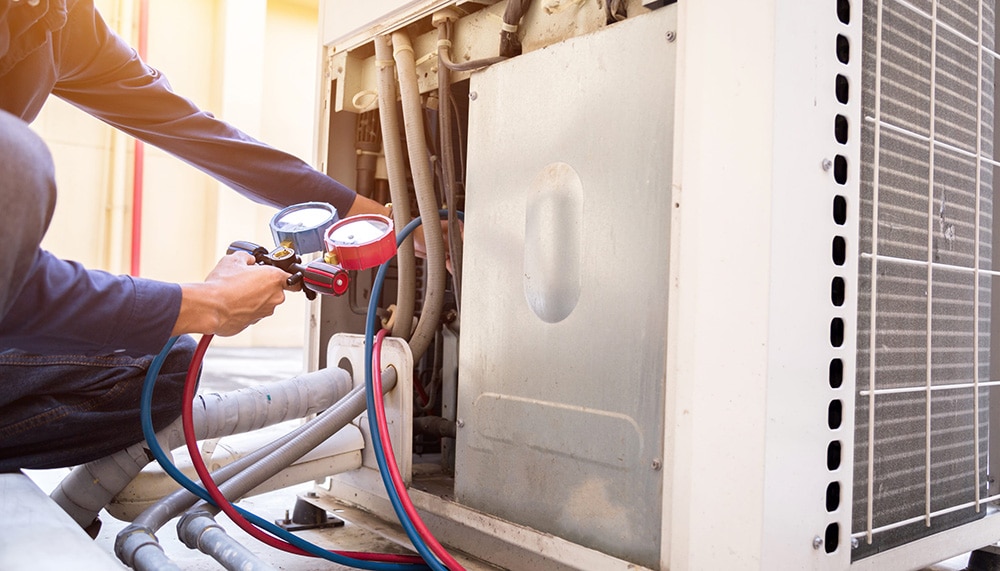
Checking refrigerant levels and pressures
Air conditioners operate within specific pressure ranges set by the manufacturer. Low refrigerant or improper pressure affects cooling performance and can damage the compressor.
Technicians measure system pressures to confirm the equipment is operating within recommended limits.
Inspecting and testing electrical components
Capacitors, contactors, and wiring connections are tested. These parts naturally weaken over time due to heat and electrical load.
Electrical failure is one of the most common causes of summer AC breakdowns.
Clearing the condensate drain line
Air conditioners remove humidity from your home. That moisture drains away through a small pipe.
If the drain line becomes blocked, water can back up and shut the system down. Clearing the drain prevents this issue.
Verifying airflow and filter condition
Proper airflow is required for efficient operation. Restricted airflow can cause the evaporator coil to freeze or reduce cooling capacity.
Filters are checked and replaced as needed, and airflow is evaluated to ensure proper system performance.
Thermostat and control check
The thermostat is tested to confirm proper communication with the system. Incorrect settings or calibration can lead to short cycling or uneven cooling.
How Maintenance Protects Efficiency and Warranty
American Standard and other manufacturers design equipment to operate within specific performance ranges. When coils are dirty or airflow is restricted, systems operate outside those ranges.
Routine maintenance helps:
- Maintain rated efficiency levels
- Reduce strain on the compressor
- Support proper refrigerant operation
- Keep electrical components within safe limits
Most manufacturers also require documented maintenance to maintain warranty coverage. Skipping maintenance may affect long-term protection.
Does AC Maintenance Extend System Life?
Air conditioners are complex systems that operate under high pressure and temperature. Excess heat, restricted airflow, and electrical stress accelerate wear.
Keeping coils clean, airflow balanced, and components tested reduces unnecessary strain. While maintenance does not eliminate normal wear, it helps the system operate under intended design conditions.
Is an AC Tune-Up Worth It?
Homeowners often weigh the cost of maintenance against the risk of breakdown.
Without maintenance, systems are more likely to experience:
- Reduced cooling performance
- Higher energy bills
- Emergency service during peak demand
- Shortened equipment life
Preventative service focuses on preparation rather than reaction.
Spring Into Maintenance Before Summer Arrives
March and April are ideal months for AC service. Scheduling before the first heat wave provides flexibility and reduces the risk of mid-season emergency repairs.
Preparing early supports consistent comfort throughout summer.
Maintenance Plans Provide Ongoing Protection
Many homeowners choose a maintenance plan to ensure seasonal service is scheduled automatically.
Benefits typically include:
- Scheduled spring AC maintenance
- Fall furnace maintenance
- Priority scheduling during peak season
- Documented service history
You can learn more about available maintenance options here:
https://sammyshvac.com/maintenance-plans/
Ready to Schedule Your Spring AC Tune-Up?
If your air conditioner has not been serviced since last cooling season, now is the time to prepare it for summer.
Schedule online here:
https://sammyshvac.com/contact-us/
Or call 801-698-0096 to schedule your spring AC maintenance.